NationalArchive
Protest is not a crime

This month, the government’s Police, Crime, Sentencing and Courts Bill (the Policing Bill) reaches a crucial stage in the House of Lords. Our Green peers Jenny Jones and Natalie Bennett have been leading opposition in the Lords to this extremely dangerous Bill, which effectively allows the police, acting under instruction from government, the power to stop any protest. But, they can’t do it alone.
The offences created by the Bill criminalise peaceful protesters and carry a maximum sentence of 51 weeks in prison. This is an assault on some of our most fundamental democratic rights.
Many people are aware that this Bill is a threat to basic civil liberties but don’t realise how much worse it has become following a series of amendments that have been slipped into the Bill at a late stage, without proper scrutiny or debate. These amendments would:
- Criminalise any protest that might “interfere” with infrastructure such as roads, railways, oil refineries and printing presses. This could be used to ban all effective protests, including protest against airport expansion and picketing by union members taking industrial action.
- Criminalise protesters who attach themselves to another person, to an object, or to land (“locking on”). This was one of the forms of protest used by the suffragettes in their long campaign for votes for women.
- Greatly expand police “stop and search” powers, allowing the police to stop and search people or vehicles if they suspect they might be carrying any item that could be used in prohibited protests. A prohibited protest is defined in the Bill as any protest that has “a relevant impact” on or causes “serious annoyance” to any two people within the vicinity of the protest, or that causes “serious disruption” to any organisation. Material for use in protests might include placards, banners, loudhailers or any other items commonly used by protesters.
- Give police the right to stop and search people without suspicion, if they believe that protest will occur in a particular area.
- In effect the Bill gives the police, acting under instruction from government, the power to stop any protest. The criminal offences created by the Bill and its amendments carry a maximum sentence of 51 weeks in prison.
These are dictatorial powers that would remove some of our most basic democratic rights and freedoms.
They would enable the government, or future governments, to turn the UK into a police state.
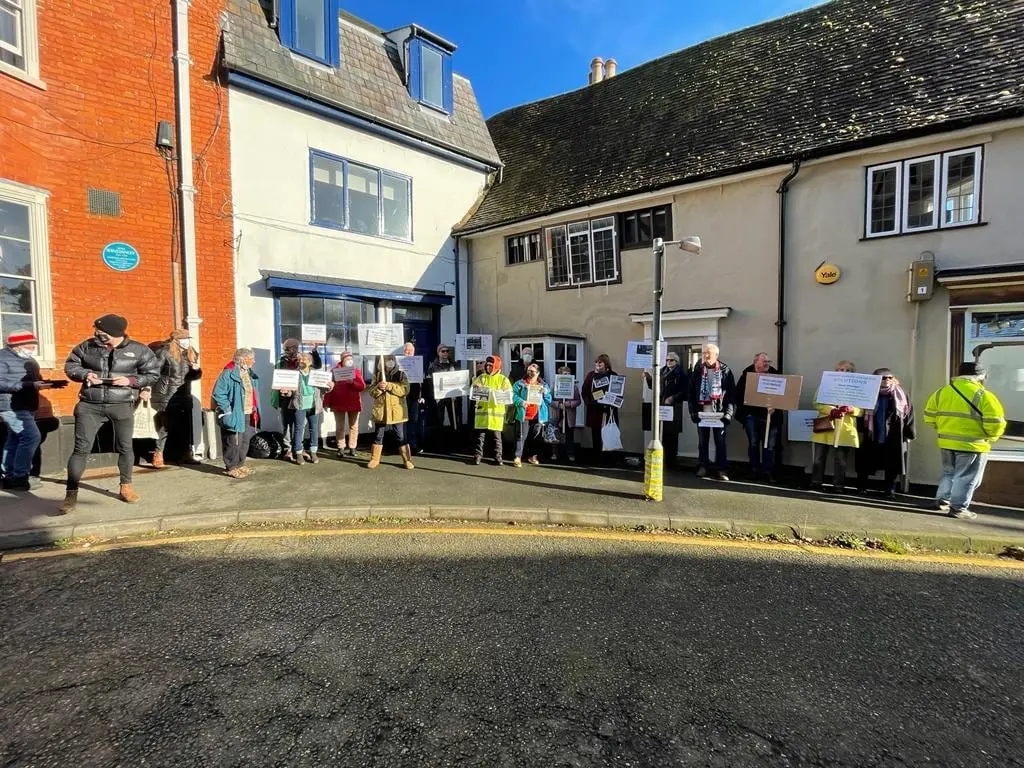
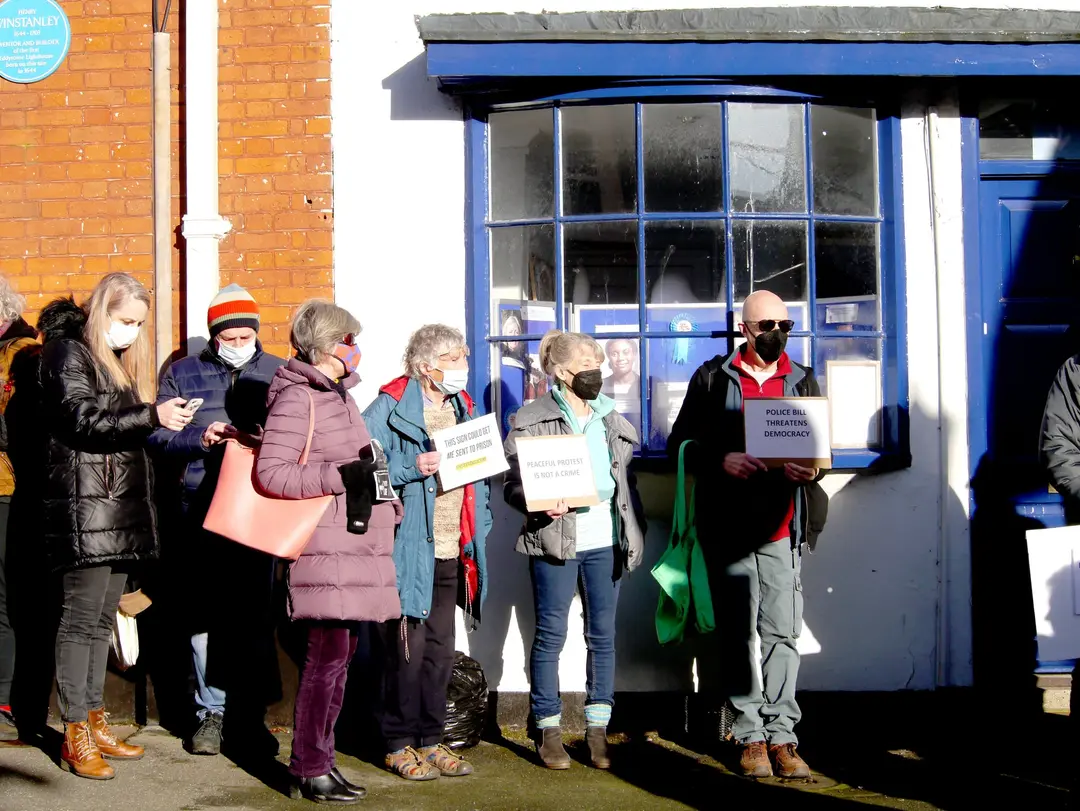
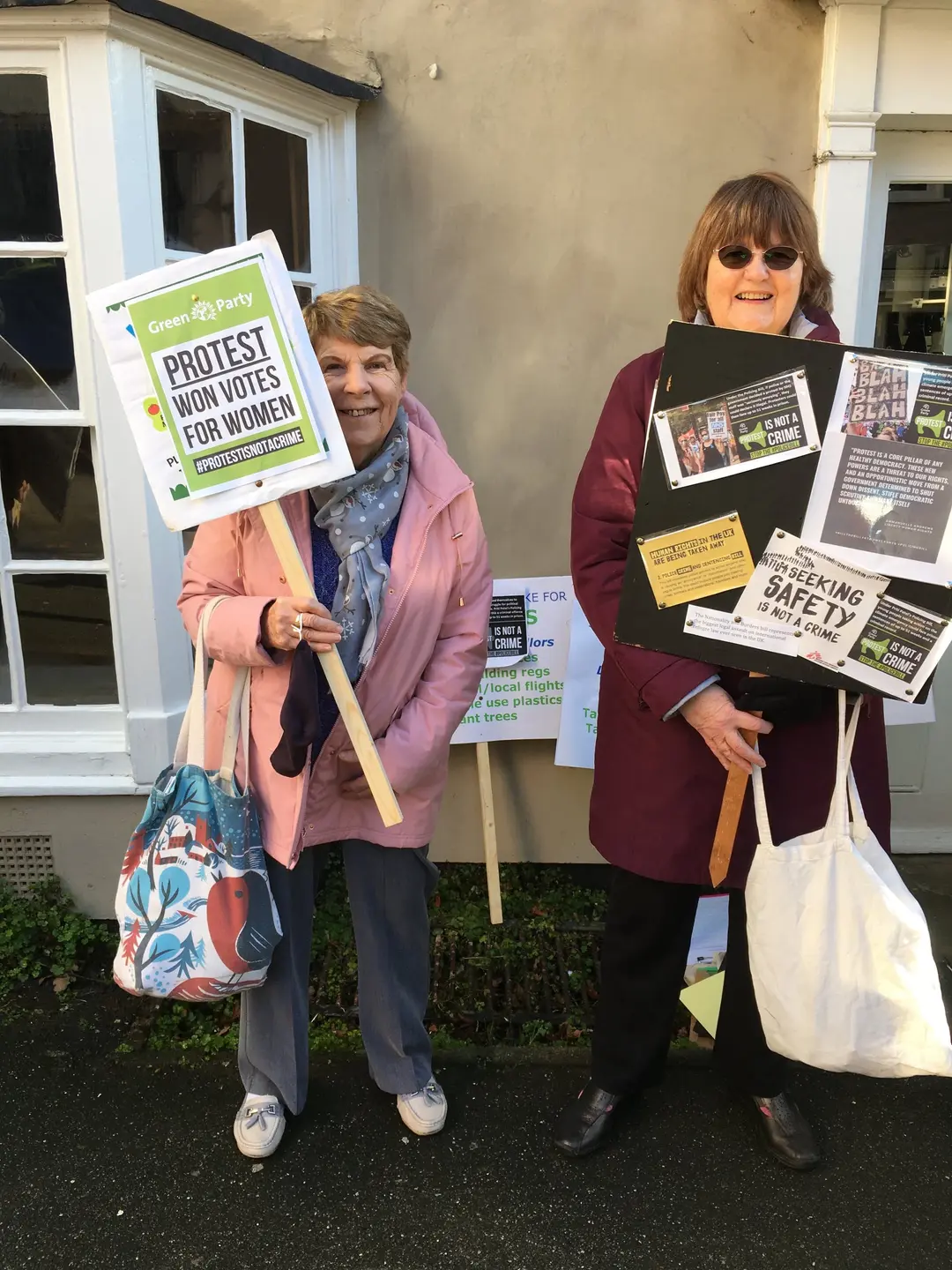
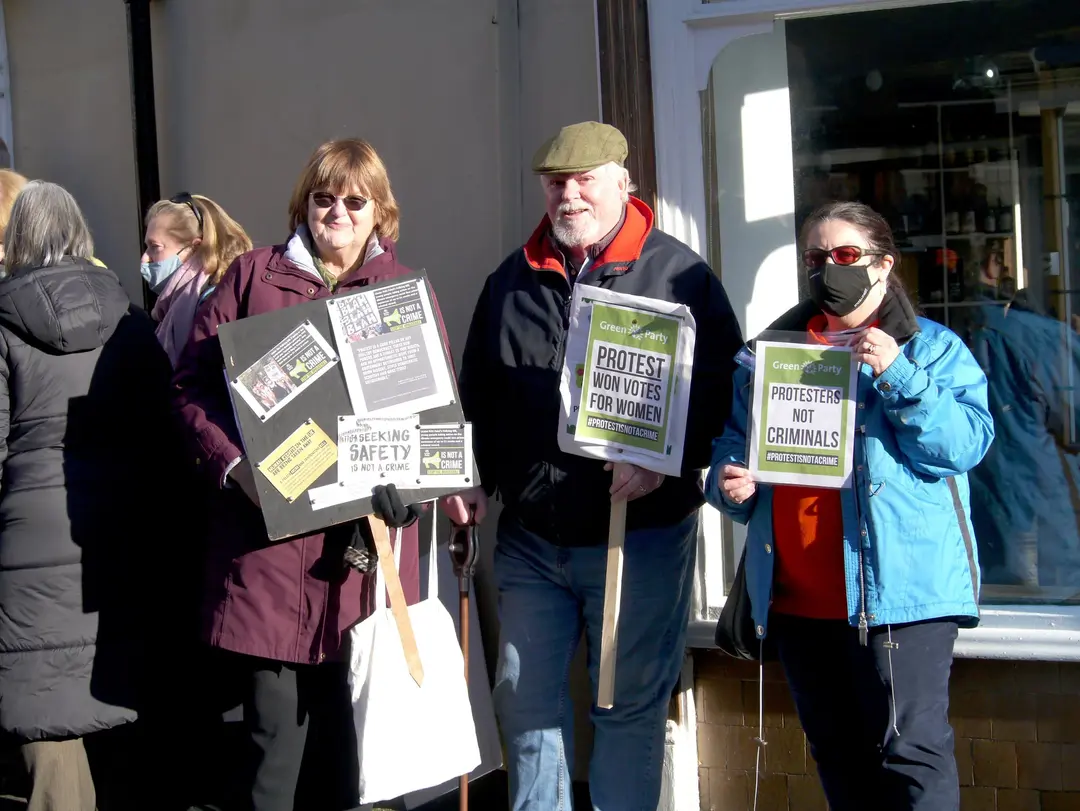
Photos from the protest at 12 noon on Wednesday 12th January outside the constituency office of our MP, Kemi Badenoch, at 3, Museum Street, Saffron Walden, CB10 1JN: